In Brief
Feldbinder EUT bottom valve assembly – DN100/DN150 discharge spigot with EPDM, PTFE or silicone seal, bottom discharge valve or butterfly valve. Signs of wear: product leaking at the spigot, resistance when closing, product residue on the outside of the tank. Seal replacement: 2–4 hours. Material selection depends on the cargo: EPDM for plastic granulates, PTFE for food and chemical products. Preventive replacement every 3 years or when symptoms appear. PHS Magnum in Chorula – parts from stock, service record for TDT.
Feldbinder EUT Bottom Valve Assembly – Function and Construction
The bottom valve assembly is the valve-and-seal system at the lowest point of the EUT tank, responsible for maintaining a pressure-tight seal during transport and controlled material discharge during pneumatic unloading. In Feldbinder EUT trailers, two main types of bottom valve assembly are used.
Discharge Spigot with Bottom Discharge Valve
The most common arrangement in EUT trailers. It consists of:
- Discharge spigot (DN100 or DN150) – a stainless steel stub welded to the tank bottom
- Bottom discharge valve – mushroom or ball type, operated manually by handwheel or pneumatic lever
- Valve seat seal – EPDM, PTFE or silicone ring
- Flange seal – between spigot and tank outlet
- Connection flange – for attaching the flexible discharge hose
Butterfly Valve (Flap Valve)
An alternative design used in newer EUT models. A disc element rotates 90° inside the valve body. The seal is a rubber ring set into the body (EPDM or PTFE). The butterfly valve offers lower flow resistance at larger diameters.
Flange Seal
Every flanged connection in the valve assembly has its own seal ring – flat gasket or O-ring, in the same materials as the valve seat. Flange seals typically wear faster than valve seat seals, particularly when connections are regularly dismantled for cleaning.
Stainless Silo Trailer Leaks – Signs of Valve Assembly Wear
The bottom valve assembly is the most frequently serviced component on EUT trailers. A leak with a full or recently discharged tank is one of the main causes of trailer downtime. The following symptoms indicate that service intervention is required.
Sign 1 – Product Residue on the Outside of the Tank
A characteristic white or grey deposit around the spigot seat or flange – powder or granulate seeping through a failed seal. Most visible immediately after discharge, when internal tank pressure was at its highest. Indicates a worn or damaged valve seat ring.
Diagnosis: Clean the area around the valve assembly and carry out a pneumatic pressure test (0.3 bar). Confirm any leak with sealing foam applied to the joint.
Sign 2 – Difficulty Closing the Valve with a Full Tank
A bottom valve that normally closes with one hand now requires a spanner or both hands. Possible causes:
- Contamination or fouling of the seat – granulate or dust lodged on the seal surface
- Valve spindle deformation (bent shaft) – e.g. from mechanical impact
- Swelling of the EPDM seal after contact with an incompatible product
Ignoring this symptom can lead to spindle failure and uncontrolled valve opening whilst in transit.
Sign 3 – Leak at the Flange After Connecting the Hose
A leak visible at the flanged connection between the discharge hose and the spigot. Cause: worn or cracked flange ring (flat gasket or O-ring). Repair is straightforward – replace the ring – but without action it risks spilling cargo during discharge.
Sign 4 – Corrosion or Deformation of the Spigot
Visible rust (bluish or brown discolouration) on the surface of the spigot or flange on food-grade tanks. May indicate damage to the passive layer (Cr₂O₃) or use of inferior-grade stainless steel during a previous repair. Spigot replacement and passivation of the new weld are required.
Bottom Valve Assembly Replacement Procedure at PHS Magnum
Replacement of the seal or the complete Feldbinder bottom valve assembly is carried out as follows:
- On-site assessment and diagnosis – inspection of the valve assembly: spigot, valve, seals, flanges; pressure test (0.3 bar, 15 minutes)
- Parts procurement – Feldbinder seals, valves and spigots are held in stock at PHS Magnum or sourced from Feldbinder suppliers within 2–5 working days
- Disassembly – unbolting flange bolts, removing the valve from the seat, cleaning the seat of the old seal material
- Spigot condition assessment – inspection of the connecting weld and wall thickness; welding repair in 304L/316L by a certified welder where required
- Fitting new valve assembly or seal – torqued to Feldbinder specification; assembly paste compatible with the cargo used throughout
- Leak test – pneumatic pressure test (0.5 bar, 30 minutes), visual inspection
- Service record – date, scope of work, parts and materials used, test results; document required by TDT at pressure vessel inspection
Total time for a standard DN100 spigot seal replacement: 2–4 hours.
Seal Material Selection – Matching the Cargo
Correct seal material selection is critical to the longevity of the valve assembly. An incorrect choice leads to rapid wear or product absorption by the seal.
Plastic Granulate (PE, PP, PVC)
Recommended material: EPDM (ethylene propylene diene monomer)
- Operating temperature: –40 to +120°C
- Good resistance to water vapour, dilute acids and alkalis
- Not suitable for contact with mineral oils or fuels
Dry Food Products (Flour, Sugar, Starch)
Recommended material: food-grade silicone or FDA-grade EPDM
- Silicone: soft, tasteless, odourless, range –60 to +200°C; approved for food contact (EC 1935/2004)
- FDA-grade EPDM: harder, abrasion-resistant, FDA 21 CFR certified
Chemical and Pharmaceutical Products
Recommended material: PTFE (polytetrafluoroethylene)
- Chemically inert to virtually all substances
- Temperature range: –200 to +260°C
- Required for transport of chemically aggressive or pharmaceutical GMP products
Wet Food Products (Juices, Pastes)
For liquid or high-moisture products, EPDM or silicone seals with Shore A hardness 60–70 are used.
Replacement Schedule – When to Plan Servicing
A preventive bottom valve assembly replacement programme avoids roadside breakdowns and costly downtime:
| Component | Inspection | Preventive Replacement |
|---|---|---|
| Valve seat seal | Every 6 months | Every 3 years or 300,000 km |
| Flange ring | Every 6 months | Every 2 years (food) / 3 years (other) |
| Bottom discharge valve (complete) | Every 12 months | Every 8–10 years or on failure |
| Discharge spigot | At each TDT inspection | On corrosion or damage |
For food-grade and pharmaceutical transport, 6-monthly inspection and 2-yearly seal replacement is mandatory due to the requirements of receiving facility audits.
Feldbinder Spare Parts – Availability at PHS Magnum
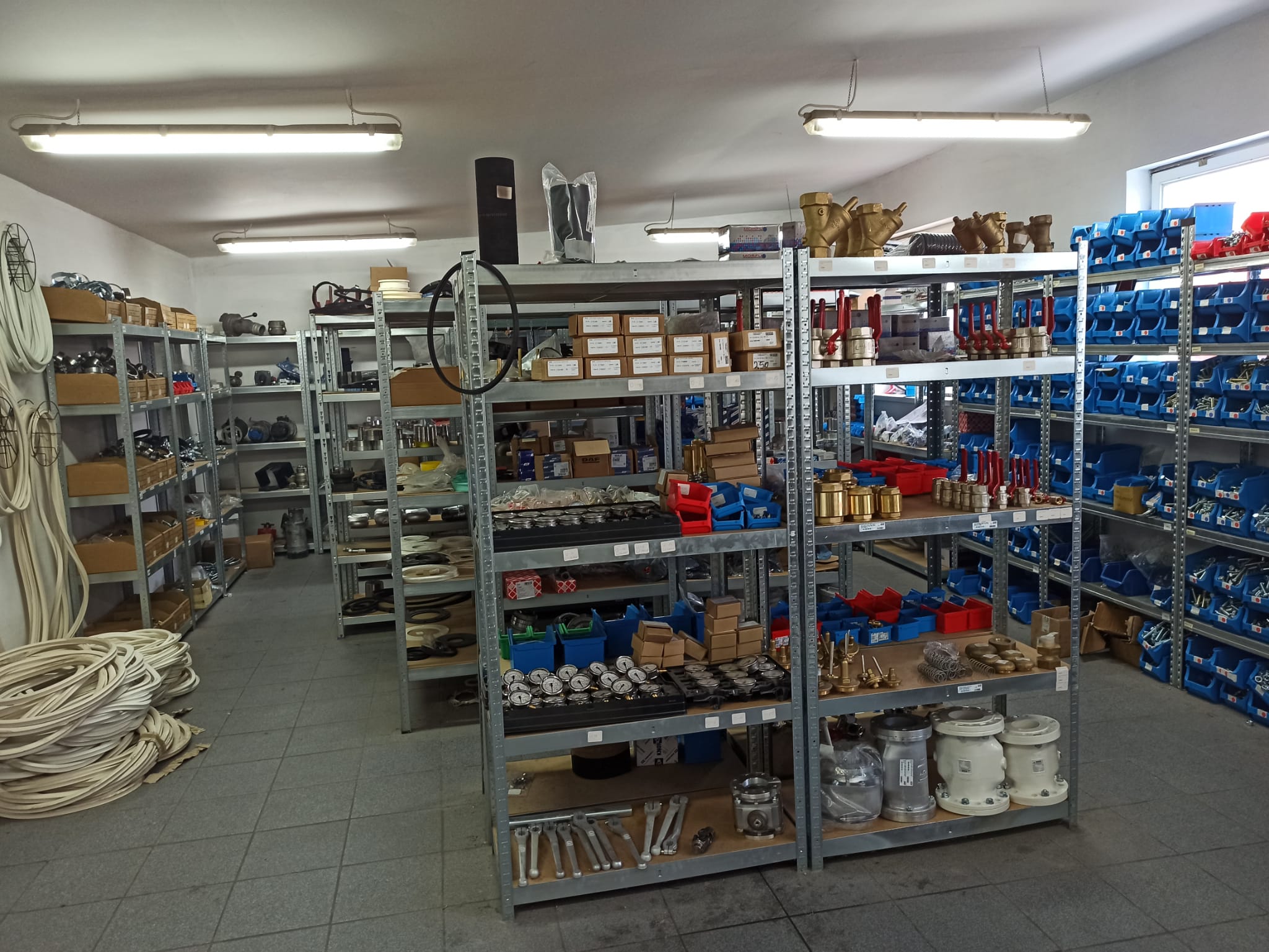
PHS Magnum maintains a stock of parts for Feldbinder EUT trailers:
- Valve seat seals DN100 and DN150 (EPDM, PTFE, silicone)
- Flange rings (flat gaskets, O-rings)
- Bottom discharge valves and butterfly valves
- Discharge spigots in stainless steel 304L and 316L
- Flange bolts and nuts (stainless steel A2/A4)
Browse the full parts range: Feldbinder Spare Parts
Contact: +48 602 716 551 · biuro@magnumchorula.pl
Related: Feldbinder Service · TDT Inspections · Repair and Refurbishment · Stainless Steel Cleaning and Passivation