In Brief
Feldbinder trailer service operates on three levels: weekly driver checks, an annual periodic inspection (pneumatics, valves, brakes), and a TDT pressure vessel inspection every two years. Scheduled maintenance costs a fraction of the unplanned downtime that comes with a 55–65 m³ trailer sitting idle. PHS Magnum (ISO 9001:2015) services Feldbinder EUT and KIP trailers in Chorula, 4 km from the A4 motorway.
Feldbinder Trailer Service — Planning Maintenance So the Trailer Keeps Moving
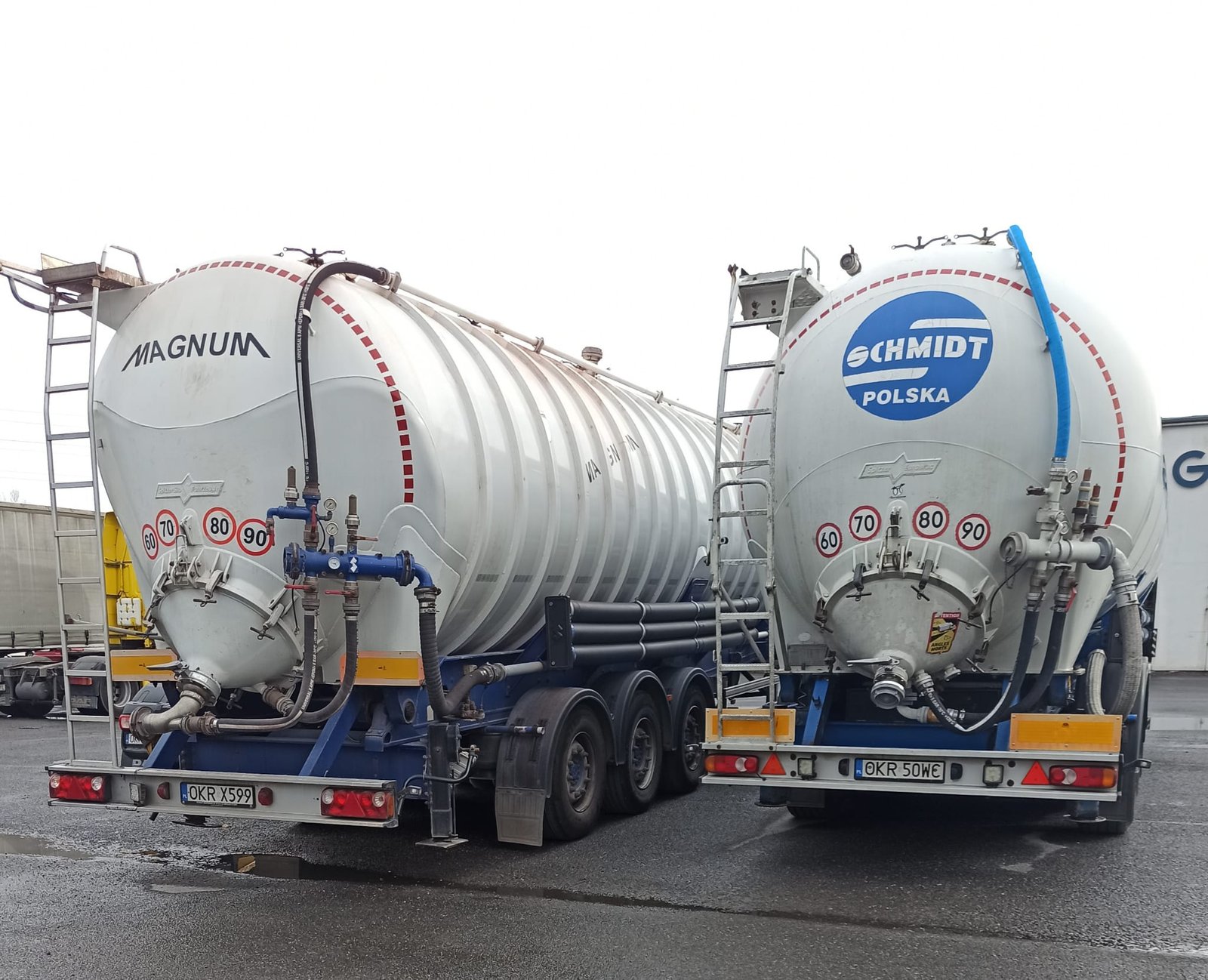
A Feldbinder trailer — whether an EUT stainless-steel fixed-tank or an aluminium KIP tipper — is a pressurised vessel on wheels. It operates under positive pressure with every discharge, carries loads that are sensitive to contamination, and is subject to mandatory TDT technical supervision. That means service is not something you do “when something breaks”; it is a cycle that needs planning just as carefully as route scheduling.
Below is a complete picture: what the inspection cycle looks like, exactly what the workshop checks, and why the “scheduled vs emergency” calculation always comes down in favour of planning ahead.
Feldbinder EUT and KIP Inspection Cycle
In practice, Feldbinder maintenance falls into three levels:
Level 1 — Driver checks (weekly). Visual inspection of hatch and discharge spout seals, pressure gauge readings, pneumatic line drainage, condition of discharge hoses and couplings. Fifteen minutes that catch 80% of minor faults before they become failures at the discharge point.
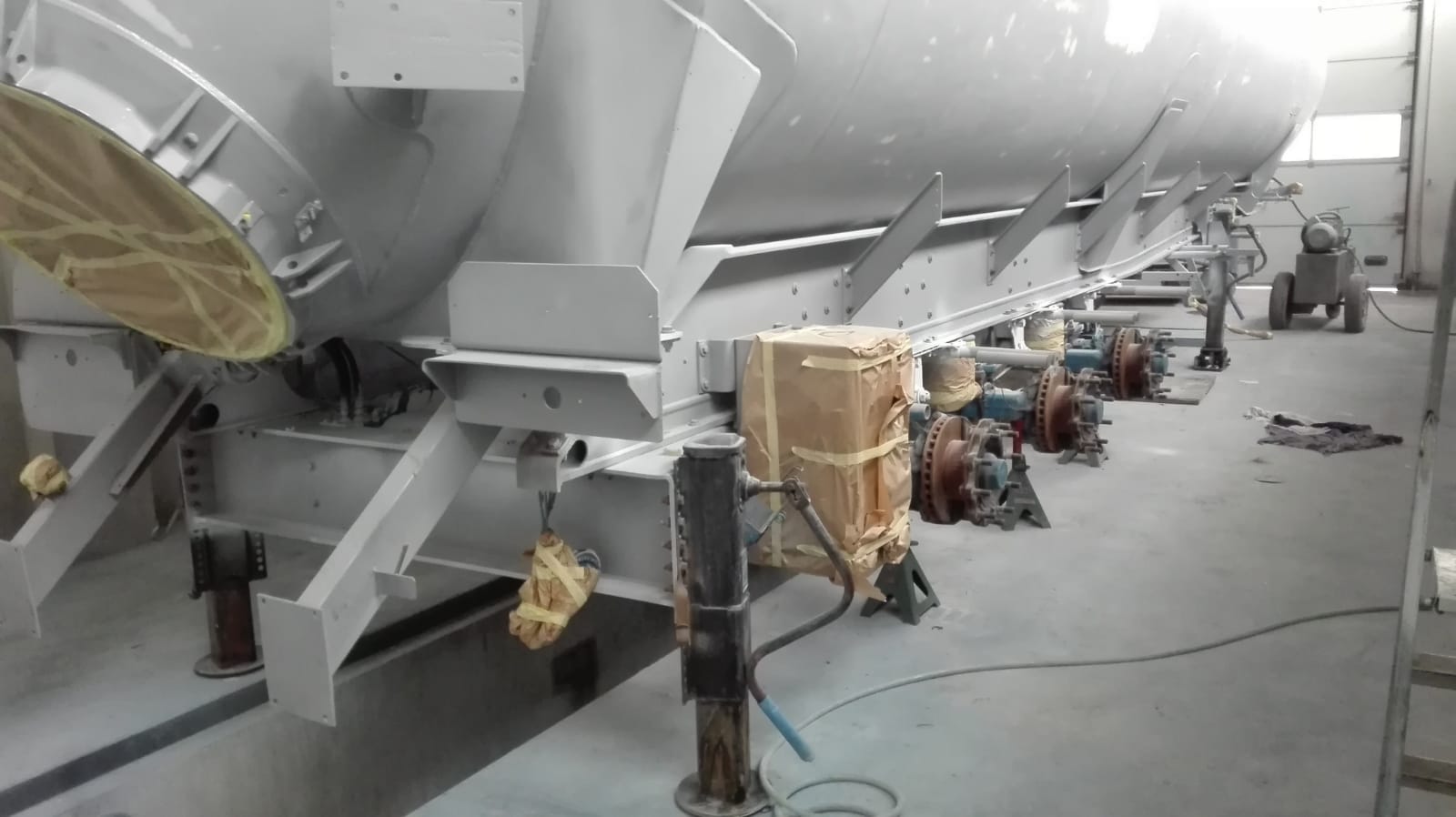
Level 2 — Periodic workshop inspection (every 12 months or approximately 120,000 km). Full service of the valve assembly, pneumatics, running gear, and braking system — detailed scope below. On KIP models, the hydraulic tank-tipping system is included.
Level 3 — TDT pressure vessel inspection (every 2 years). A mandatory statutory examination of the pressure vessel by a Transport Technical Supervision (TDT) inspector. Without a valid TDT certificate the trailer cannot legally discharge under pressure — which means it does not earn. The full procedure and how to prepare a trailer for inspection is covered on our TDT inspections page .
Trailers operating in intensive international service — typically 55–65 m³ capacity, several discharges per week — are worth checking more frequently than the minimum schedule requires. Every load–discharge cycle puts the seals, valves, and aeration pads under pressure.
What a Feldbinder Periodic Inspection Covers — Four Areas
1. Discharge Pneumatics
The heart of an EUT trailer. The workshop inspects the aeration pads (permeability, no wear or oil contamination), air lines, pressure relief valve, and overall system integrity via a pressure test. A clogged or worn aeration pad shows up as an extended discharge time and residual material left in the tank — drivers typically notice only once discharge takes twice as long as it should.
2. Top and Bottom Valves
The discharge spout, bottom valves, Storz/Camlock couplings, and top hatches with covers — every point where the tank meets the outside world. The workshop checks seal condition (hardened or cracked rubber means replacement), free valve operation, and pressure-tight integrity. This is the most common reason for a failed TDT inspection, which is why the workshop replaces worn components before the inspection, not after.
3. Running Gear and Brakes
Brake pads and discs, EBS diagnostics, air suspension, wheel bearing condition, tyre state. Feldbinder fits BPW or SAF axles — a workshop with access to genuine parts can handle both. Brakes on a trailer carrying 25+ tonnes of bulk material are not a place for compromises.
4. Pressure Vessel and Documentation
Visual inspection of the vessel (welds, corrosion pits, deformation), leak test, safety valve check, and — equally important — completeness of the regulatory documentation. A TDT inspector starts every examination with the paperwork; missing records from previous repairs can halt an inspection more effectively than a technical fault.
On KIP models, a fifth item is added: the hydraulic tipping cylinder, tank hinges, and chassis — checked for leaks, play, and fatigue cracks.
Scheduled vs Emergency Service — The Downtime Calculation
The most expensive part of a Feldbinder trailer breakdown is never the repair itself. It is the downtime.
A trailer that has failed its TDT inspection or stopped with a leaking valve assembly is not running loads. On top of that come: contractual penalties for late delivery, the cost of a replacement unit, a driver waiting instead of driving, and — if the failure happens at a customer’s discharge point — the risk of losing the contract. A roadside breakdown adds towing and repair at a workshop that may never have seen a pressurised silo trailer before.
Scheduled service reverses that calculation entirely. The service date is set around the route schedule, the trailer arrives with parts already ordered, and the TDT inspection is preceded by a preparatory check — so the examination ends with a certificate of approval first time. Downtime is short, predictable, and in the calendar rather than torn out of the middle of the season.
The principle is straightforward: every fault found in the workshop is cheaper than the same fault found at the discharge point. For a tailored quote on an inspection or repair, ask for a quote at our service page .
How to Prepare a Trailer for a Service Visit
A few things that reduce workshop downtime and keep costs down:
- Clean tank interior. The vessel should be washed out with no residual load — the technician cannot inspect valves or welds through a layer of flour or granulate, and a TDT inspector will decline to examine a dirty tank.
- Complete documentation. The vessel’s inspection logbook, TDT certificates from previous examinations, records of repairs and any valve modifications. Gaps in documentation add more delay than most technical faults.
- Driver’s fault list. Extended discharge times, dust at couplings, pressure drops, uneven braking — the more precise the description, the faster the diagnosis.
- Advance booking. If valve or seal replacement is planned, the workshop orders parts before the trailer arrives rather than during the visit.
A well-prepared trailer arrives and leaves within a predictable time window — and that is exactly what scheduled maintenance is for.
Feldbinder Service for DACH Operators
The PHS Magnum service base is located in Chorula near Opole, 4 km from the A4 motorway and approximately 180 km from the German border. For operators from Germany, Austria, and Switzerland, this means combining a scheduled service or TDT inspection with a regular run through Poland — the trailer reaches the workshop without any empty mileage.
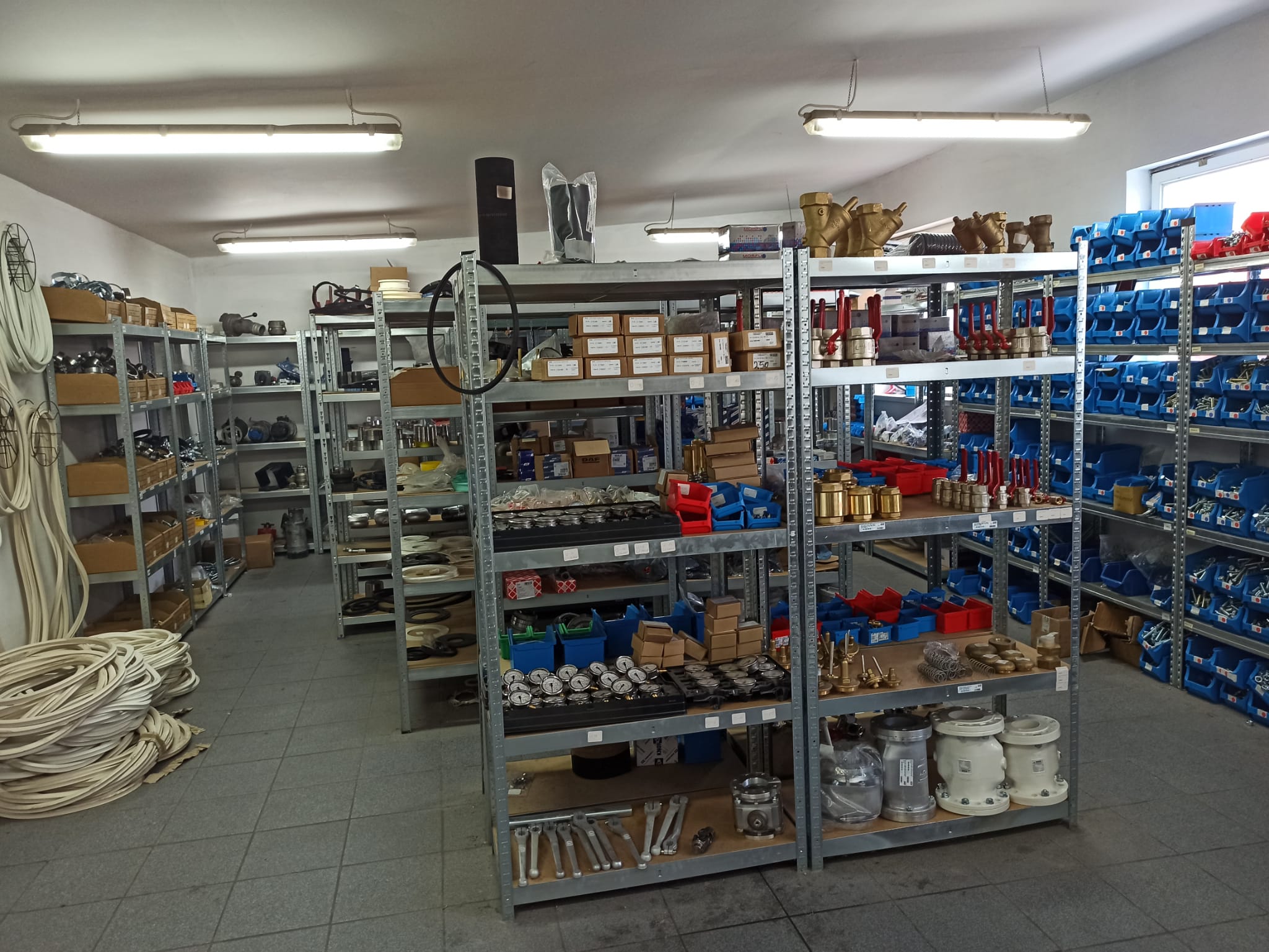
The workshop operates under an ISO 9001:2015 quality management system, services Feldbinder EUT and KIP trailers as well as stainless-steel vessels for the food industry, and also carries out accident repairs and full refurbishments alongside a stock of Feldbinder spare parts — seals, aeration pads, valve assemblies. Feldbinder.pl is part of the PHS Magnum transport and service network at magnumchorula.pl ; for mixed fleets, the same workshop and team also service Spitzer trailers — details at spitzer.pl .
Book a Feldbinder service or TDT inspection: tel. +48 602 716 551, e-mail biuro@magnumchorula.pl .
Related: Feldbinder Service · TDT Inspections · Feldbinder Spare Parts · Feldbinder EUT vs KIP — Key Differences · Common Faults and Diagnostics