In brief
FDA / food-grade seals are a prerequisite for operating a Feldbinder trailer on flour, sugar and food-grade granulate duties. They are found at manholes, end caps, the discharge spigot and valves. Materials used: food-grade EPDM, food-grade silicone and PTFE — each supplied with a declaration of conformity to Regulations (EC) 1935/2004 and (EU) 10/2011. The optimum moment for replacement is the two-yearly TDT tank inspection. PHS Magnum selects and fits seals at its workshop in Chorula, 4 km from the A4 motorway.
Why a food-grade trailer requires FDA seals
A Feldbinder stainless-steel trailer carries loads that go directly into the food supply chain: flour, sugar, starch, skimmed milk powder, food-grade granulates. The tank itself, polished 304L/316L stainless steel, is inherently hygienic — but the tank alone is not enough. In every trailer, a dozen or more rubber and polymer components are in direct contact with the product, and the most critical of these are the seals.
Standard industrial rubber in these positions creates a twofold problem. First, a legal one: materials intended for food contact must comply with Regulation (EC) 1935/2004, and plastics must additionally comply with Regulation (EU) 10/2011, which sets migration limits for substances that may transfer into food. Second, a commercial one: food-sector customers are auditing transport ever more rigorously and can turn a vehicle away at the bay if the carrier cannot produce declarations of conformity for all components in contact with the cargo.
The FDA designation (compliance with US 21 CFR 177) has become shorthand in the industry for “food-grade material” and often appears alongside EU declarations. When ordering seals for a food-grade trailer, it is worth insisting on both: a declaration of conformity with EC 1935/2004 / EU 10/2011 and the manufacturer’s material specification.
Food-grade seal materials — EPDM, silicone, PTFE
Material selection is a balance between flexibility, temperature and chemical resistance, and installation position.
Food-grade EPDM
The primary material for manhole, end-cap and discharge-spigot seals. It offers good flexibility across a wide temperature range, and good resistance to ozone ageing and steam — important when the trailer goes through a chemical wash. The food-grade compound differs from the industrial grade in its formulation: no prohibited plasticisers or fillers. Visually, the two grades can be indistinguishable, which is precisely why documentation matters more than colour.
Food-grade silicone
The material of choice where operating temperatures are higher (hot-fill loads, hot-water washing) and for cargoes sensitive to foreign odours — silicone is sensorially neutral, which is appreciated by operators carrying sugar and flour. It is less mechanically robust than EPDM, so in positions exposed to abrasion it requires more frequent inspection.
PTFE
Highest chemical and thermal resistance, with a smooth, non-absorbent surface that neither absorbs the product nor retains odours and is easy to clean. Used in valves and fittings, often as flat or composite seals (PTFE with an elastomeric core). The drawback of virgin PTFE is its lack of elasticity; composite versions are therefore used in joints requiring high clamping force.
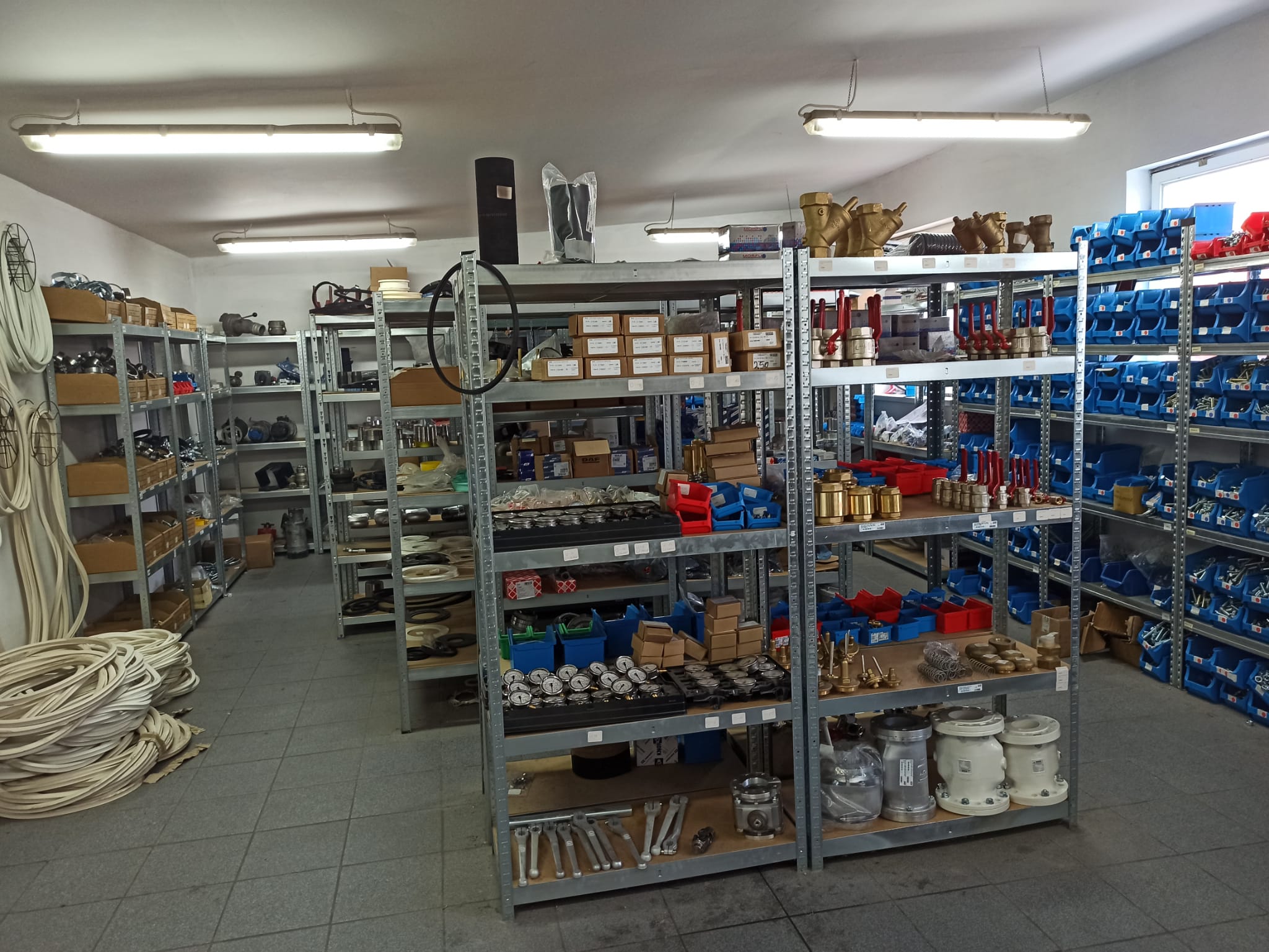
A practical note: a single trailer typically uses all three materials simultaneously — EPDM at manholes, silicone or EPDM at the discharge spigot, PTFE in the valves. When ordering a complete set, it is helpful to quote the trailer model (EUT, TSA) and the year of manufacture, as Feldbinder changed fitting dimensions between production runs. The Feldbinder spare-parts catalogue can help you identify the correct seals for a specific model; a broader, network-wide catalogue covering silo trailers of all makes is maintained at magnumchorula.pl .
Where food-grade seals are located in a Feldbinder trailer
Three cargo-contact zones:
Upper manholes. The manhole cover gasket is the largest single seal in the trailer and the first thing an auditor looks at. It must hold at discharge overpressure while shedding no particles into the cargo. Typical wear patterns: hardening from UV exposure and permanent compression set at the locking-clasp contact points.
Lower discharge fittings. The discharge spigot seal, bottom valves and flanged nozzles. This is the most heavily worked zone — every discharge cycle sends product under pressure past these seals. Leakage shows up as dust at the couplings and a pressure drop visible on the gauge.
Storz/Camlock discharge couplings. Replaceable gaskets in the hose couplings. The cheapest item in the set and the most commonly neglected — yet these are the seals most frequently in contact with the product at the customer’s end. It is worth keeping a spare set in the trailer’s tool box.
In a 55–65 m³ tank, the total length of all cargo-contact seals runs to several metres of rubber. A single cracked section is enough for elastomer particles to enter the flour — and for an entire delivery at the customer’s end to become a quality claim.
Seal replacement — best done at the TDT inspection
Food-grade seals are a wear item: they harden, crack and take permanent set. Replacement intervals in practice:
- inspection — at every annual service and after any incident (emergency discharge, contact with a non-standard load);
- planned replacement — full set of lower fittings every 2–3 years;
- immediate replacement — cracking, hardening, permanent deformation, discolouration or any foreign odour from the rubber.
The details of fitting matter: seat must be clean and dry, free of old elastomer residue, lubricated only with a lubricant approved for food contact, and clamped with even torque — a twisted or over-stretched seal will fail within the first few weeks of service. Spare seals should be stored away from sunlight and ozone sources (e.g. running electric motors), in their original packaging; food-grade rubber ages on the shelf just as it does in service.
Keeping a simple maintenance log is also worthwhile: date of replacement, material, declaration-of-conformity reference number. At a food-sector customer audit, such a record answers the inspector’s questions in a minute rather than triggering a search through invoices from two years ago.
The most cost-effective moment to replace the complete set is the TDT tank inspection, carried out every two years. The TDT inspector (Transportowy Dozór Techniczny) requires the fittings to be dismantled for the examination anyway — so the labour cost of disassembly is already “included” in the procedure, and fitting a new set of seals adds minimal extra cost. The trailer leaves the inspection with a fresh TDT decision and a full new set of seals. The full inspection procedure is described on the Feldbinder TDT inspection page .
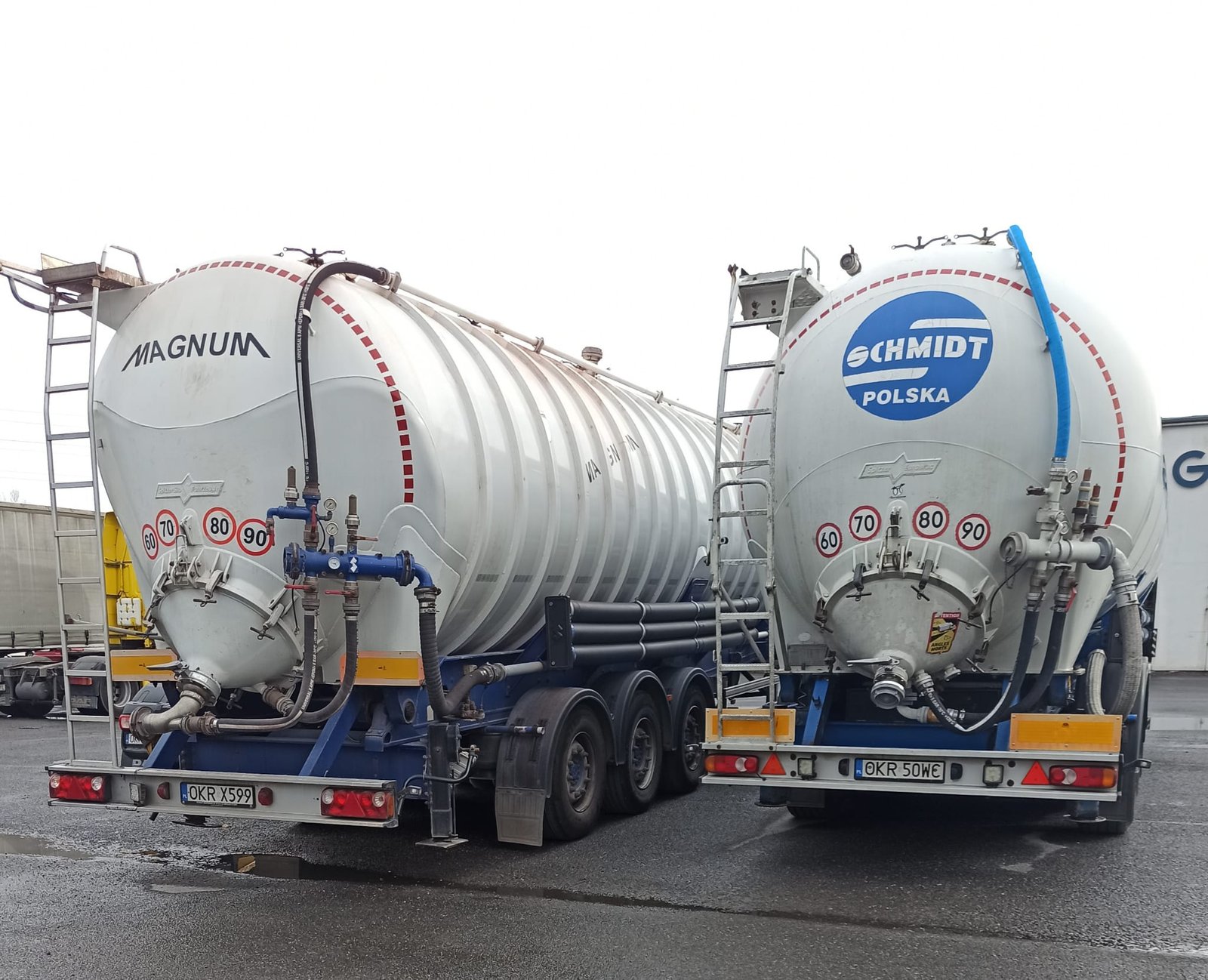
PHS Magnum’s workshop in Chorula (4 km from the A4 motorway, ISO 9001:2015) selects and supplies FDA/food-grade seals for Feldbinder EUT silo trailers and food-grade tankers, fits them during routine servicing and repairs , and keeps the most common sizes in stock — no waiting for factory deliveries. A declaration of conformity is issued with every food-grade seal for customer audit purposes. The same site operates a big-bag to silo-trailer transloading terminal that also handles food-grade granulates — the same food-grade cleanliness standards apply throughout the entire chain, from the seal to the transloading operation.
Enquire about seal selection and pricing: tel. +48 602 716 551, e-mail biuro@magnumchorula.pl .
Related: Feldbinder Spare Parts · Feldbinder Service · TDT Inspections · Food-grade trailer cleanliness certificate · Stainless steel cleaning and passivation