In short
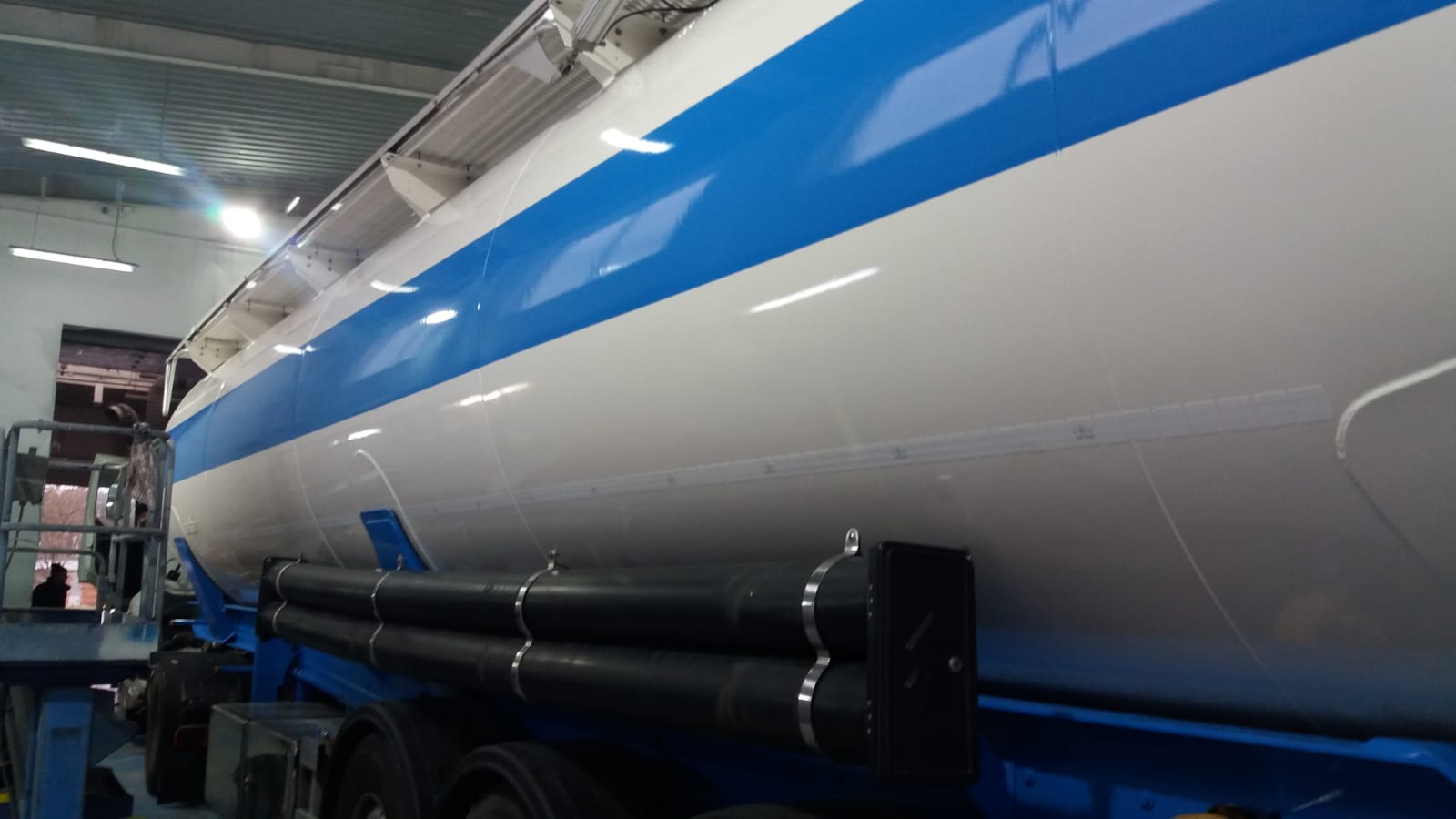
The stainless steel Feldbinder EUT carries PE/PP granulate, mineral powders and food as dry bulk. Before it sets off it must be loaded — from big-bags, octabins or containers, usually by gravity. For a food-grade tank, the cleanliness of this step matters as much as later service. The entire chain — loading, transport and service — can happen at one base in Chorula, 180 km from the German border.
Where the EUT’s cargo comes from
Materials for a Feldbinder EUT — PE/PP granulate, sugar, flour, mineral powders — usually arrive in big-bags, octabins or sea containers and must first be transferred into the silo trailer. Sea containers (20’ and 40’) are unloaded directly at the terminal yard without additional transhipment.
Gravity loading and tank hygiene
The big-bag → EUT transfer is done by gravity through the top dome, without pneumatics: no dust, no material abrasion, lower contamination risk in the 304L/316L stainless tank. The SMIALA transloading terminal handles it at up to 200 tonnes per day — including food-grade material.
Why gravity loading matters for the EUT tank
| Risk factor | Pneumatic loading | Gravity loading |
|---|---|---|
| Grain breakage (polymer dust) | High | None |
| Electrostatic charge | High | Low |
| Moisture introduction | Medium | Low |
| Iron contamination of SS tank | Possible | Negligible |
These differences are especially important for Feldbinder EUT tanks carrying food (flour, sugar, milk powder) where Ra surface values and contamination levels are audited by food-industry clients.
Clean loading = less service work
Loading quality directly affects the service intervals:
- Moisture → risk of clumping in the tank; crevice corrosion on 304L/316L welds
- Contamination → harder cleanliness protocol and Ra measurement; may trigger full tank cleaning before the next TDT inspection
- Grain dust → accumulates in aeration pads, shortens their service life
A dry, clean gravity loading cycle prevents the three most common reasons a Feldbinder needs unscheduled service before the next planned maintenance.
From loading to service: one location
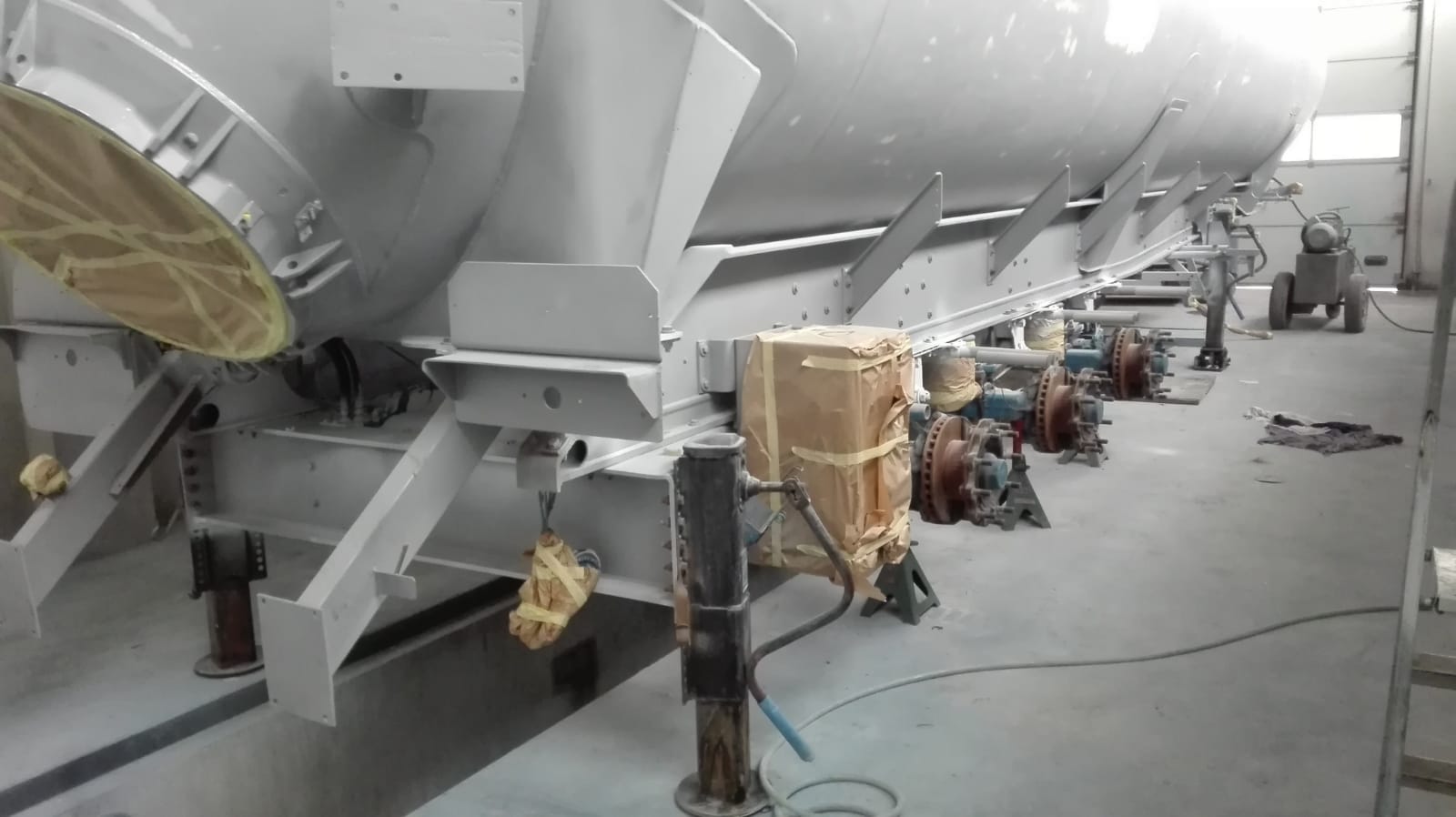
Loading and tank care are one quality chain. After transloading, the trailer can go straight to Feldbinder service , passivation or TDT inspection — all at one base by the A4. PHS Magnum issues a cleanliness protocol after every tank repair, confirming:
- Complete internal cleaning
- No metallic residues after welding
- Ra measurement of food-contact surfaces
- Clearance for food contact per FDA 21 CFR and EU Regulation 1935/2004
More on the network: one service for the whole fleet . The same base also services concrete pumps — shared TDT schedule for trailers and pumps saves trips and downtime.
Planning loading and service for a Feldbinder? Call: +48 602 716 551 or write to biuro@magnumchorula.pl .